|
Pan American Experiences
|
------- |

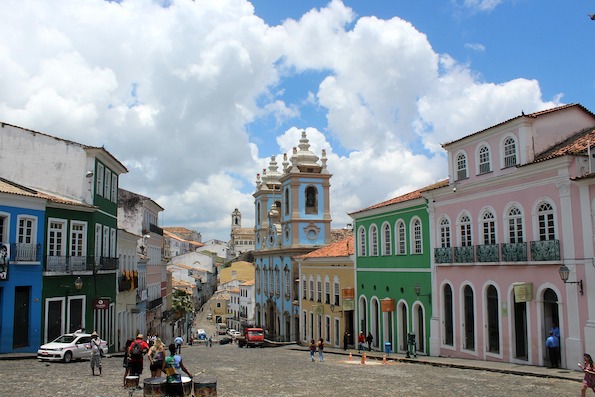
Pelourinho in Salvador da Bahia, with its colorful colonial houses, is a UNESCO World Heritage Site and a living symbol of Afro-Brazilian history and culture. Image by: masteroblima from Pixabay.
Welcome to the World’s Largest New Year’s Celebration
|
BRAZIL ------------------------------------------1247[EXPERIENCE] | |||
Explore Historic Neighborhoods of Salvador de BahíaWhere Brazil began — and never stopped reinventing itself.By Marbel Montoya for Ruta Pantera on 3/5/2026 12:46:56 PM |
||||
| You hear the drums before you turn the corner. A steady, layered rhythm bouncing off pastel façades and worn cobblestones. The air smells like dendê oil and ocean salt. A woman in white lace passes you, her skirt moving like a slow wave. Above, balconies lean toward each other as if the buildings are in conversation.
This is Salvador — and history here doesn’t sit behind glass. It walks beside you.
Founded in 1549 as Brazil’s first capital under Portuguese rule, Salvador became one of the most important ports in the Atlantic world. It was a center of colonial administration, sugar wealth, and — crucially — the transatlantic slave trade. Nearly five million Africans were forcibly brought to Brazil over three centuries; a significant portion arrived here in Bahia. What that means today is that Salvador is the most African city outside Africa. Religion, food, music, language — everything carries layers of Yoruba, Bantu, and Fon influence braided with Portuguese colonial architecture. In 1985, the historic center, known as Pelourinho, was declared a World Heritage Site by UNESCO for its preserved colonial urban fabric. But preservation here is not static. It’s rhythmic. Pelourinho — color, conflict, and rebirth The heart of the historic center is Pelourinho. Rows of 17th- and 18th-century buildings painted in saturated blues, yellows, and pinks line steep streets that feel almost theatrical. At the center stands the Church of São Francisco, its interior covered in gold leaf — an overwhelming display of baroque wealth built during the height of Brazil’s sugar economy. The name “Pelourinho” refers to the whipping post that once stood in the square, where enslaved Africans were punished publicly. Walking here is beautiful — and uncomfortable. That tension is part of the experience. In the 1990s, large-scale restoration projects revived the neighborhood after decades of neglect. Today, capoeira circles form in plazas at sunset, live samba spills from doorways, and cultural centers celebrate Afro-Brazilian heritage. It’s polished in parts, raw in others — and entirely alive. Santo antônio além do carmo — slower, local, overlooking the bay A short walk north leads to Santo Antônio Além do Carmo, one of the most atmospheric neighborhoods in Salvador. The pace shifts. Fewer tour groups. More locals on stoops. Colonial houses with tiled roofs cascade toward the water, and from the edges of the neighborhood you get wide views over the Bay of All Saints — Baía de Todos-os-Santos — the largest bay in Brazil. At sunset, the sky turns copper and fishing boats cut dark lines across the horizon. Boutique guesthouses, artist studios, and small bars occupy former mansions. It feels residential but creative — a place where the city exhales. |
||||
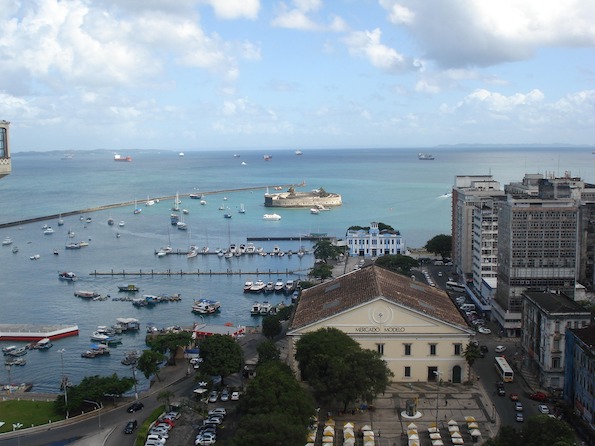
Salvador da Bahia, one of the oldest cities in the Americas, was founded in 1549 and is considered the heart of Afro-Brazilian culture. Image by: soel84 from Pixabay. |
Rio vermelho — where the past meets the present Further east along the coast, Rio Vermelho blends bohemian nightlife with deep spiritual roots. This is where many locals gather to honor Yemanjá, the Afro-Brazilian goddess of the sea in Candomblé religion. Each February 2nd, thousands bring offerings of flowers and perfume to the water. By night, the neighborhood pulses with live music, open-air seafood stalls, and young crowds moving between bars. It’s not colonial postcard Salvador. It’s contemporary, layered, evolving — proof that history here is foundation, not museum. How to explore it — and what to understand before you arrive Salvador’s historic neighborhoods are best explored on foot, especially in the morning before heat and crowds peak. Comfortable shoes are essential — the cobblestones are uneven and the hills steep. Guided walking tours led by Afro-Brazilian historians provide context that transforms what you’re seeing from pretty façades into lived narratives. Safety varies by area and time of day. Pelourinho and Santo Antônio are generally safe during daylight hours when active, but it’s wise to avoid empty streets at night without local guidance. What nobody tells you is how immersive the soundscape is. Drumming rehearsals. Church bells. Vendors calling out. Conversations spilling from open windows. You don’t just see Salvador — you hear it, constantly. And you taste it. Acarajé fried fresh in palm oil. Moqueca simmered in coconut milk. Food here is archive as much as nourishment. A city built on pain — sustained by culture To explore Salvador’s historic neighborhoods honestly is to acknowledge the contradictions. Colonial churches built with enslaved labor. Wealth extracted from sugar plantations. Cultural brilliance forged under oppression. Yet what defines Salvador today is not tragedy alone — it is resilience. Capoeira, samba-reggae, Candomblé, cuisine, language — these are not relics. They are daily practice. Walking these streets, you begin to understand that heritage is not about frozen time. It’s about continuity. Salvador does not hide its past. It sings through it. Take your time here. Let the rhythm set your pace. |
|||
 Add this article to your favorites
[FOR MEMBERS ONLY]
Add this article to your favorites
[FOR MEMBERS ONLY]
Copy this link to send this article to a friend: [FOR MEMBERS ONLY] |
||||

|
|
||||
|---|---|---|---|---|
| |
|
|
|
|
×
|
||||
|
References: UNESCO World Heritage Centre. (2024). Historic Centre of Salvador de Bahia. https://whc.unesco.org IPHAN – Instituto do Patrimônio Histórico e Artístico Nacional. (2024). Preservation of Pelourinho. https://www.gov.br/iphan Secretaria de Turismo da Bahia. (2024). Salvador cultural districts guide. https://www.ba.gov.br |
||||
Please leave a comment about this article: 1247 |
|
| Enter your email address: |
Your email will not be displayed. |
| Your nickname: | |
| Your comment: | |
| Was this article helpful to you? | |
|
|
|
Articles about exciting travel experiences in our hemisphere.
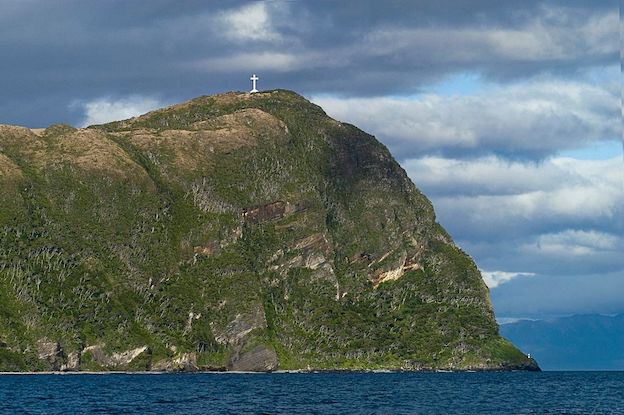
Cape Froward, Chile

Welcome to the World’s Largest New Year’s Celebration
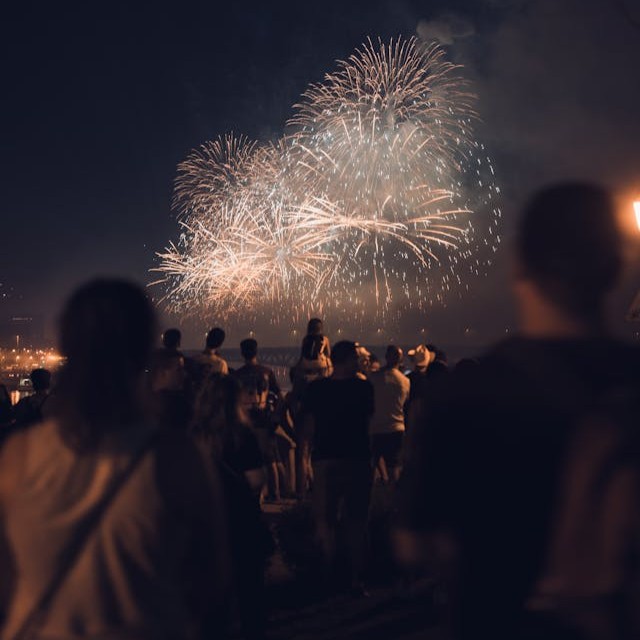
For those traveling from North, Central, or South America, New Year's Eve in Rio offers a rich narrative about how a city can transform a universal holiday into a unique celebration, rooted in local traditions and open to the world.








|
Experiences Finder
(Search our catalog of Experiences here.) |
|---|