|
Pan American Experiences
|
------- |

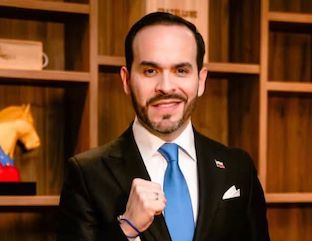
Confident of victory, with the ‘Trojan Horse’ standing watch in the background. Sometimes symbols speak louder than speeches. Many Colombians believe the real risk lies in what remains unseen.” Imagen generada con Pexels.
Shakira Redefines the Narrative of Failure
Do You Dream of Owning a Country Home in the Legendary Colombian Countryside?
Barranquilla at Carnival: experience the party that beats to the rhythm of the Caribbean. |
COLOMBIA ------------------------------------------1336[FEATURE] | |||
The New Colombian RightThe De la Espriella EraBy Jazmin Agudelo for Ruta Pantera on 6/10/2026 2:53:39 PM |
||||
| F or more than two decades, Colombian politics revolved largely around one figure: Álvaro Uribe Vélez. Few presidents have shaped public debate so profoundly, influenced multiple consecutive elections, and become a central reference point for both supporters and critics. Even after leaving office in 2010, Uribe remained one of the country's most influential political actors. Today, however, Colombia appears to be entering a new political phase. The emergence of figures such as Abelardo de la Espriella suggests that the Colombian right is changing its face, language, and political strategy.
This transformation does not necessarily signal the disappearance of Uribismo but rather its evolution. Voter concerns have shifted, younger generations prioritize different issues, and Colombia’s political environment differs significantly from that of the early 2000s. Understanding this transition requires examining both Uribe’s legacy and the reasons why, despite the controversies surrounding his political career, he continues to retain substantial support.
Uribe’s Rise in a Colombia Marked by Violence When Uribe assumed the presidency in 2002, Colombia was facing one of the most difficult periods in its recent history. Guerrilla groups maintained strong territorial control, kidnappings were widespread, and vast regions of the country were influenced by illegal armed organizations. Against this backdrop, Uribe built his popularity around a simple yet powerful promise: restoring security. His Democratic Security Policy sought to strengthen the armed forces, expand state presence, and combat insurgent groups through military means. Many Colombians remember this period as a time when the state regained operational capacity. Kidnapping rates declined significantly, and several guerrilla structures suffered major military setbacks. For supporters, these achievements constitute a substantial part of his political legacy. Yet the history of those years is far more complex than a narrative of military success alone. The Shadows of Uribismo One of the most controversial aspects of Uribe’s administration was the scandal known as the “false positives.” Thousands of civilians were killed and later presented as guerrilla fighters killed in combat by members of the military seeking institutional rewards and recognition. The revelations surrounding these crimes damaged Colombia’s international reputation and sparked intense debate regarding the political responsibility of those governing the country at the time. Additional controversies included illegal surveillance operations conducted by intelligence agencies, allegations of pressure against judges and journalists, and investigations involving numerous politicians associated with Uribismo due to their alleged connections with paramilitary groups. The debate over Uribe’s direct responsibility in many of these events remains politically and legally contested. Nevertheless, these issues have profoundly shaped public discussions about his legacy. Critics argue that Uribismo represented a security model that at times prioritized military results over human rights and contributed to a highly polarized political environment that continues to affect Colombia today. The Relationship Between Uribismo and Paramilitarism Few accusations have been as sensitive in Colombia’s recent history as those concerning links between political sectors and paramilitary organizations. During the 1990s and 2000s, paramilitary groups exercised considerable influence in various regions of the country. Subsequent judicial investigations uncovered connections between these groups and numerous political leaders. The phenomenon known as parapolitics resulted in convictions against congressmen, governors, and regional leaders, many of whom belonged to political movements aligned with or supportive of Uribe’s administration. Critics contend that parts of the Uribista political project benefited from alliances with illegal armed actors. Defenders of Uribe, however, argue that responsibility should be assessed individually and that convictions involving some allies do not automatically implicate the former president. Regardless of perspective, this issue remains one of the deepest unresolved debates in Colombian politics. |
||||
|
Why Do Millions Still Support Him?
A common question among both domestic and international observers is why Uribe continues to enjoy significant support after years of controversy. The answer cannot simply be reduced to ignorance or manipulation; political reality is far more nuanced. Many Colombians place great value on the security improvements achieved during his administrations. For those who experienced the fear generated by kidnappings, terrorist attacks, and the expansion of armed groups, these memories carry substantial political weight. Additionally, some supporters believe that criticism directed toward Uribe has not always been impartial and view him as a target of political persecution by ideological opponents. Political identity also plays a role. Individuals who have supported a leader or movement for many years often interpret information in ways that reinforce existing beliefs. This phenomenon is not unique to Colombia but is common across democracies worldwide. Furthermore, many voters support Uribe less out of personal admiration than because they associate him with values such as order, authority, and security. The End of an Era Although Uribismo remains influential, it no longer dominates Colombian politics as it did during the first decade of the twenty-first century. Younger generations have grown up in a different context and often prioritize issues such as employment, education, climate change, corruption, and social inequality. The signing of the peace agreement with the Revolutionary Armed Forces of Colombia fundamentally altered the country’s political landscape. The struggle against guerrilla movements ceased to be the sole issue around which national politics revolved. Time itself has also contributed to political wear. No leadership lasts forever, and political figures frequently encounter difficulties connecting with new generations after decades in the spotlight. The Emergence of Abelardo de la Espriella Amid this transformation, Abelardo de la Espriella has emerged as a prominent figure. A lawyer, businessman, and media personality, he represents a style of leadership distinct from Uribe’s. While sharing certain conservative positions and criticisms of the political left, his approach reflects a different era. Whereas Uribe built his leadership through public administration and governmental experience, De la Espriella has developed much of his influence through traditional media and social media platforms. His rhetoric is often more direct, confrontational, and designed to capture immediate attention. He speaks the language of a digital age in which message speed frequently outweighs argumentative depth. A Right Wing Influenced by Global Trends The new Colombian right has not emerged in isolation. Across different regions of the world, political leaders have appeared who combine nationalist rhetoric, criticism of traditional elites, security-centered messages, and strong media presence. Social media has accelerated the international circulation of these political strategies. Within this context, figures such as De la Espriella seek to connect with voters frustrated by traditional institutions, distrustful of political parties, and concerned about issues such as security and economic stability. Public communication no longer depends exclusively on traditional media. A viral video can reach millions of people within hours and reshape public debate. The Role of Anti-Petrismo Another significant factor in the transformation of the Colombian right is opposition to the government of Gustavo Petro. Just as political identity was previously shaped by support for or opposition to Uribismo, many conservative voters now define themselves largely through their rejection of Petro. For these sectors, opposition to Petro has become a mobilizing force as important as any specific policy proposal. This environment has created opportunities for new right-wing leaders to gain visibility, particularly among citizens who believe the country requires a different political direction. The Risks of the New Right The rise of new political leaders also presents challenges. Critics warn that politics based primarily on confrontation can intensify social polarization. When public debate becomes a permanent struggle between perceived enemies, democratic consensus becomes increasingly difficult to achieve. There are also concerns about the tendency of some contemporary leaders to simplify complex problems through emotionally charged messages or seemingly easy solutions. History demonstrates that healthy democracies require rigorous debate, strong institutions, and well-informed citizens. What Comes After Uribismo? The most important question is not whether Uribismo will disappear but which elements of its legacy will endure. Security concerns will likely remain central for a significant portion of the Colombian electorate, and values commonly associated with Uribismo may continue to influence political discourse for years to come. Nevertheless, the Colombian right appears to be entering a different stage. New leadership styles, emerging communication technologies, and evolving social concerns are reshaping the political landscape. Abelardo de la Espriella symbolizes this transition, representing a right wing that is more media-oriented, more digital, and less dependent on the traditional structures that characterized Uribismo. Colombia’s recent history cannot be understood without Álvaro Uribe. His influence transformed the political system, redefined national debates, and shaped several generations of Colombians. At the same time, his legacy remains intertwined with profound controversies involving human rights, political polarization, and the complex relationship between power, security, and armed conflict. Today, Colombia appears to be at a transitional moment. Uribe’s influence remains significant, but it is no longer sufficient on its own to explain the evolution of the country’s political right. New figures such as Abelardo de la Espriella are occupying spaces that once belonged almost exclusively to Uribismo, adapting conservative messages to a new political and technological reality. The coming years will determine whether this new right succeeds in establishing itself as a durable political alternative or merely represents another phase in the long evolution of Colombian conservatism. What is already evident is that the political era inaugurated by Uribe is changing, and with it, the way the Colombian right seeks to gain and exercise power. |
||||
 Add this article to your favorites
[FOR MEMBERS ONLY]
Add this article to your favorites
[FOR MEMBERS ONLY]
Copy this link to send this article to a friend: [FOR MEMBERS ONLY] |
||||
|
|
||||
|---|---|---|---|---|
| |
|
|
|
|
×
|
||||
|
References: Human Rights Watch. (2015). On their watch: Evidence implicating senior army officers in false positive killings in Colombia. Human Rights Watch. Jurisdicción Especial para la Paz. (2021). Auto 033 de 2021: Muertes ilegítimamente presentadas como bajas en combate por agentes del Estado. International Crisis Group. (2024). Colombia’s Political Landscape and Security Challenges. Brussels: International Crisis Group. Organization for Economic Co-operation and Development. (2024). OECD Economic Surveys: Colombia 2024. Paris: OECD Publishing. Political Order and Political Decay. (2014). New York, NY: Farrar, Straus and Giroux. Why Nations Fail. (2012). New York, NY: Crown Publishers. United Nations Development Programme. (2023). Human Development Report 2023/2024. New York: UNDP. |
||||
Please leave a comment about this article: 1336 |
|
| Enter your email address: |
Your email will not be displayed. |
| Your nickname: | |
| Your comment: | |
| Was this article helpful to you? | |
|
|
|
Articles about exciting travel experiences in our hemisphere.

Cape Froward, Chile





Welcome to the World’s Largest New Year’s Celebration
For those traveling from North, Central, or South America, New Year's Eve in Rio offers a rich narrative about how a city can transform a universal holiday into a unique celebration, rooted in local traditions and open to the world.















|
Experiences Finder
(Search our catalog of Experiences here.) |
|---|