|
Pan American Experiences
|
------- |

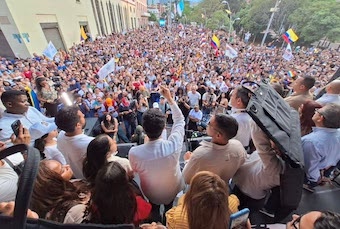
This July 20 marked a significant political moment for Colombia. With the change in government and the return of a right-wing political movement to power, the country begins a new chapter filled with expectations, debate, and the hope that the years ahead will bring stability, progress, and opportunities for all Colombians. Image provided by Pexels.
|
COLOMBIA ------------------------------------------1359[BUSINESS FEATURE] | |||
Petro's Final Independence Day Speech and Colombia's Political CrossroadsA Farewell That Went Beyond CeremonyBy Jazmin Agudelo for Ruta Pantera on 7/29/2026 4:17:05 AM |
||||
| W hen Colombian President Gustavo Petro addressed the nation during the country's Independence Day celebrations on July 20, the occasion extended far beyond the traditional institutional speech delivered each year by the head of state. For many Colombians, particularly those who have supported Petro's political movement since his election in 2022, the address represented a deeply symbolic moment one that combined historical memory, political reflection, and an implicit message about the future direction of the country. As Petro enters the final stage of his presidency, every public appearance is increasingly viewed through the lens of legacy. His July 20 speech therefore became more than a celebration of Colombia's independence from Spain in 1810; it evolved into an opportunity to reflect on the social, political, and historical transformations that have defined his administration. Supporters interpreted the event as the symbolic closing of a political chapter, while critics viewed it as another example of Petro's tendency to frame contemporary politics through historical symbolism. Regardless of political affiliation, few observers questioned that the speech carried a significance extending well beyond the formal traditions associated with Colombia's National Day.
One of the most emotional moments occurred when Petro presented the hat once worn by Carlos Pizarro Leongómez the former commander of the M-19 guerrilla movement and later a presidential candidate to Senator María José Pizarro, his daughter. The gesture immediately resonated with many sectors of Colombia's political left, who interpreted it as a tribute to those who participated in the country's long and often painful struggle to transform armed conflict into democratic participation. Carlos Pizarro occupies a unique place in Colombian history. After leading the M-19 during its final years as an insurgent organization, he became one of the principal advocates for peace negotiations that culminated in the group's demobilization in 1990. His assassination during the presidential campaign that same year transformed him into one of the most enduring symbols of Colombia's search for reconciliation. By placing the hat in the hands of his daughter, Petro appeared to reinforce the idea that historical memory should remain alive through democratic institutions rather than political violence. For many supporters, the act represented not simply a personal tribute but a broader acknowledgment of the sacrifices made by individuals who sought political change through different stages of Colombia's modern history. The symbolism continued with Petro's announcement that several historically significant objects currently housed inside the presidential palace, the Casa de Nariño, would be returned to the institutions responsible for preserving Colombia's national heritage. Among the most prominent is Simón Bolívar's sword, perhaps the country's most powerful political symbol. The sword will return to the Quinta de Bolívar Museum in Bogotá, where it remained for decades before Petro ordered it brought to the presidential palace at the beginning of his administration. The object carries extraordinary historical significance. Beyond representing the military campaigns that secured independence across much of northern South America, Bolívar's sword acquired a second symbolic life in 1974, when members of the M-19 stole it from the museum as a political statement. After the group's peace agreement, the sword was returned to the Colombian state, becoming a symbol not only of independence but also of reconciliation and democratic transition. Petro's decision to return it to the museum suggests that such symbols belong to the nation as a whole rather than to any particular government or political project. |
||||
|
Petro also announced that the cassock belonging to Camilo Torres Restrepo the Catholic priest, sociologist, and later guerrilla member would be transferred to Colombia's National University, where Torres had served as chaplain and professor. Like Carlos Pizarro, Camilo Torres remains one of Colombia's most debated historical figures. Admired by some for his commitment to social justice and criticized by others for taking up arms, his legacy continues to provoke discussion more than half a century after his death. By relocating both Bolívar's sword and Torres' cassock to institutions dedicated to historical preservation, Petro argued that these objects should serve educational and cultural purposes rather than political symbolism inside the presidential palace. According to the president, such artifacts belong to Colombia's collective historical memory and should remain accessible to all citizens regardless of ideology. This message reflected one of the central themes of his speech: the idea that historical symbols should unite Colombians through remembrance rather than divide them through contemporary political disputes.
The speech, however, extended beyond historical symbolism into present-day political debate. Petro's remarks were widely interpreted as drawing a clear contrast between his administration's priorities and those advocated by several opposition leaders and presidential hopefuls. Among the most significant issues remains Colombia's future energy policy, particularly the debate surrounding hydraulic fracturing, commonly known as fracking. Supporters of fracking argue that modern extraction technologies can be implemented under strict environmental regulations, allowing Colombia to strengthen its energy security, increase public revenues, and reduce dependence on imported fuels while continuing to finance social programs. Opponents including many supporters of Petro's political movement argue that the environmental risks associated with hydraulic fracturing outweigh its economic benefits. They contend that groundwater contamination, increased seismic activity, methane emissions, and long-term ecological consequences make the practice incompatible with Colombia's environmental commitments. Within this perspective, the concept of "environmentally friendly fracking" is viewed by critics as inherently contradictory. As a result, the debate has evolved into something far broader than an argument over energy policy; it has become one of the defining questions about Colombia's future model of economic development. Competing Visions for Colombia's Future The debate over hydraulic fracturing illustrates a much broader question confronting Colombia as it approaches a new political cycle. At its core lies a fundamental choice between two competing visions of national development. One emphasizes continued investment in oil, gas, and mining as engines of economic growth, fiscal stability, and energy security. Colombia has long depended on hydrocarbons as one of its principal export sectors, with oil revenues playing an important role in financing public spending and attracting foreign investment. Supporters of this approach argue that abandoning fossil fuel production too quickly could weaken economic competitiveness, reduce government income, and jeopardize employment in regions heavily dependent on the extractive industries. The alternative vision, strongly promoted by Petro's administration, advocates accelerating the transition toward renewable energy while reducing dependence on fossil fuels. Proponents believe Colombia's extraordinary biodiversity and renewable energy potential offer an opportunity to position the country as a regional leader in sustainable development. They argue that climate change, environmental degradation, and the long-term global shift toward cleaner energy sources require governments to rethink traditional economic models. Consequently, the discussion surrounding fracking has evolved into a broader national conversation about how Colombia should balance economic development, environmental protection, and social equity in the decades ahead. For many supporters of Petro's administration, the July 20 address also served as an opportunity to reflect on what they consider the government's principal accomplishments during its four years in office. Among the policies most frequently highlighted are repeated increases in the national minimum wage, measures gradually reducing the legal workweek without lowering salaries, expanded assistance programs targeting rural communities and historically marginalized populations, and broader social initiatives designed to reduce inequality. Supporters argue that these policies sought to improve living conditions for lower-income households while strengthening labor protections and expanding opportunities for groups that have traditionally experienced limited access to public services. Petro's government also placed significant emphasis on rural development, agricultural support, and efforts to address the historic disparities between Colombia's urban centers and its countryside. Advocates believe these initiatives represent meaningful progress toward greater social justice, reflecting long-standing demands from sectors that have often felt excluded from the country's economic development. The administration also sought to advance an ambitious reform agenda in areas including healthcare, pensions, labor policy, environmental protection, and land distribution. Not every proposal achieved its intended outcome, and several reforms encountered significant political resistance within Congress and the judicial system. Nevertheless, Petro consistently presented these initiatives as part of a broader effort to modernize the Colombian state and address structural inequalities that have persisted for decades. Supporters contend that even where reforms were only partially implemented, the administration succeeded in shifting national debate toward issues such as social inclusion, climate policy, regional inequality, and the role of the state in promoting economic opportunity. They argue that one of Petro's most significant legacies may ultimately be the transformation of Colombia's political conversation itself, expanding public discussion beyond traditional security concerns to include questions of sustainability, poverty reduction, education, and social rights. Not surprisingly, these positive assessments are far from universally shared. Critics of Petro's administration question both the effectiveness and the economic consequences of several government policies. Business organizations, opposition parties, and many independent analysts have expressed concerns regarding investor confidence, fiscal sustainability, regulatory uncertainty, and the pace at which major reforms were introduced. Others argue that some government programs progressed more slowly than initially promised or faced administrative and institutional challenges during implementation. Security also remains one of the administration's most debated issues. Although the government pursued negotiations with several armed groups under its "Total Peace" strategy, critics contend that violence persisted in numerous regions, while illegal armed organizations continued to exert influence in parts of the country. From this perspective, the administration's ambitious social agenda was accompanied by significant governance challenges that limited its overall effectiveness. These differing evaluations illustrate why Petro's presidency continues to generate intense public debate both within Colombia and internationally. The contrast between these competing interpretations reflects the broader political polarization that has characterized Colombian public life in recent years. Few presidents in the country's modern democratic history have inspired such sharply divided opinions. For supporters, Petro represents a historic effort to expand social rights, address inequality, strengthen environmental protections, and redefine Colombia's development priorities after decades of governments associated with more market-oriented policies. For opponents, his presidency symbolizes institutional uncertainty, economic risk, and an approach to governance that they believe has intensified political confrontation. These contrasting narratives often coexist simultaneously, depending on the audience and political perspective. As Colombia prepares for another presidential transition, the country's political debate increasingly revolves not only around evaluating Petro's record but also around determining which national vision should guide the next stage of Colombia's democratic development. It was against this backdrop that the July 20 speech acquired meaning beyond its ceremonial purpose, becoming a reflection of the broader ideological crossroads facing the nation. A Symbolic Closing of a Political Chapter For many of Petro's supporters, the July 20 speech represented something far greater than the annual Independence Day ceremony. It was interpreted as the symbolic conclusion of a political chapter that began long before Petro entered the presidential palace. His rise to power in 2022 marked the first time in Colombia's modern history that a left-wing politician won the presidency through democratic elections, an outcome many observers viewed as a turning point in the country's political evolution. Throughout his administration, Petro consistently framed his government as part of a broader historical process aimed at addressing inequality, expanding social rights, strengthening environmental protections, and rethinking Colombia's development model. Within that context, the symbolic acts performed during the speech the return of historical artifacts, the tribute to Carlos Pizarro, and the emphasis on national memory were widely interpreted by supporters as a reaffirmation of those ideals. At the same time, many expressed concern that a future administration with different political priorities could reverse or significantly modify several of the reforms and public policies introduced during Petro's presidency. Those concerns reflect a broader pattern common to democratic systems, where changes in political leadership often bring significant shifts in public policy. In Colombia, the debate extends beyond individual government programs and touches upon more fundamental questions regarding the role of the state, economic development, environmental sustainability, and social justice. Supporters of Petro argue that maintaining reforms in labor policy, rural development, renewable energy, and social protection will be essential for reducing historic inequalities. Opponents contend that future governments should prioritize economic growth, private investment, institutional stability, and public security while reconsidering some of the current administration's initiatives. Neither perspective exists in isolation; both represent legitimate political visions competing within Colombia's democratic institutions. As a result, the transition between administrations is expected to become not merely a change in political leadership but a broader national discussion about the country's long-term priorities and identity. Beyond ideological differences, Colombia enters this new political cycle facing challenges that transcend any single administration. The country continues to confront persistent issues including regional inequality, rural poverty, organized crime, environmental conservation, fiscal sustainability, and the implementation of long-term peacebuilding efforts following decades of internal armed conflict. At the same time, Colombia possesses significant opportunities derived from its strategic geographic position, rich natural resources, growing technology sector, expanding renewable energy potential, and increasingly diversified economy. Successfully addressing these opportunities and challenges will require broad institutional cooperation, policy continuity where appropriate, and constructive democratic dialogue across ideological divisions. Regardless of which political coalition governs after Petro, many analysts agree that Colombia's long-term success will depend less on partisan victories than on the capacity of its democratic institutions to build consensus around national priorities. Viewed from an international perspective, Petro's final Independence Day speech illustrates how political symbolism continues to play an important role in democratic societies. Throughout history, presidents and prime ministers have frequently used national commemorations not only to celebrate historical milestones but also to define their own political legacy. In Petro's case, references to Carlos Pizarro, Simón Bolívar, and Camilo Torres connected contemporary political debates with figures whose lives remain deeply embedded in Colombia's historical memory. Whether interpreted as acts of reconciliation, ideological affirmation, or political messaging, these symbols demonstrate how historical narratives continue to influence present-day democratic discourse. For international readers unfamiliar with Colombian politics, understanding these references is essential for appreciating why a ceremonial speech generated such widespread public discussion across the country. The significance of Petro's July 20 address lies not only in the words delivered that day but also in the broader questions it raised about Colombia's future. The debate extends well beyond who will occupy the presidential office after the next election. It centers on the type of nation Colombians hope to build, the balance they wish to strike between economic growth and environmental sustainability, the role of social policy in reducing inequality, and the importance of preserving democratic institutions capable of accommodating competing political visions. Petro's supporters and critics may continue to disagree sharply about his presidency and its legacy, yet both perspectives contribute to an ongoing democratic conversation that will shape Colombia for years to come. In that sense, the speech marked more than the conclusion of an administration. It became a reflection of a country navigating one of the most significant political transitions in its recent history, where historical memory, democratic institutions, and competing visions of national development converge in defining Colombia's next chapter. |
||||
 Add this article to your favorites
[FOR MEMBERS ONLY]
Add this article to your favorites
[FOR MEMBERS ONLY]
Copy this link to send this article to a friend: [FOR MEMBERS ONLY] |
||||
|
|
||||
|---|---|---|---|---|
| |
|
|
|
|
×
|
||||
|
References: Bushnell, D. (2017). The Making of Modern Colombia: A Nation in Spite of Itself (Updated ed.). University of California Press. International Crisis Group. (2024). Colombia: Managing Reform and Political Polarization. https://www.crisisgroup.org/ Organisation for Economic Co-operation and Development. (2024). OECD Economic Surveys: Colombia. OECD Publishing United Nations Development Programme. (2024). Human Development Report. https://hdr.undp.org/ World Bank. (2024). Colombia Overview. https://www.worldbank.org/ Freedom House. (2024). Freedom in the World: Colombia. https://freedomhouse.org/ Fajardo, L. A. (2015). Transitional Justice in Colombia: The Role of Historical Memory. Routledge. Palacios, M. (2006). Between Legitimacy and Violence: A History of Colombia, 1875–2002. Duke University Press. Safford, F., & Palacios, M. (2002). Colombia: Fragmented Land, Divided Society. Oxford University Press. |
||||
Please leave a comment about this article: 1359 |
|
| Enter your email address: |
Your email will not be displayed. |
| Your nickname: | |
| Your comment: | |
| Was this article helpful to you? | |
|
|
|
Articles about exciting travel experiences in our hemisphere.


Cape Froward, Chile




Welcome to the World’s Largest New Year’s Celebration
For those traveling from North, Central, or South America, New Year's Eve in Rio offers a rich narrative about how a city can transform a universal holiday into a unique celebration, rooted in local traditions and open to the world.
















|
Experiences Finder
(Search our catalog of Experiences here.) |
|---|