|
Pan American Experiences
|
------- |

Hemisphere Related Articles: |
HEMISPHERE ------------------------------------------1366[COLUMN] | |||
America’s Most Expensive Road Does Not Protect Any Real BorderBy Heydi Bernal for Ruta Pantera on 8/27/2026 1:11:24 PM |
||||
| There are government projects that are justified by the numbers and projects that are justified despite them. The new border road that the Department of Homeland Security is building inside Big Bend National Park in Texas clearly belongs to the second category, and the numbers are worth examining because, without exaggeration, they represent one of the clearest examples of public waste produced by current U.S. immigration policy.
The plan, revealed in detail by journalist Wes Siler based on a source with direct access to the contract, involves 232 miles of new road—not a wall, as many assumed during months of rumors and contradictory plans—along the 118 miles of border that the park shares with Mexico. The contract costs $1.7 billion, equivalent to $7.3 million for every mile built. Construction began on August 6, but Customs and Border Protection Commissioner Rodney Scott paused the project just eleven days later, on August 17, to personally assess the terrain and hear from the local community, following a letter from Republican Senator John Cornyn requesting that the project be reviewed before moving forward. The fact that an official from the very government promoting the project felt the need to halt it already says quite a bit about how defensible it is on paper. Let’s start with the most uncomfortable fact: almost nobody crosses there. Throughout 2025, Border Patrol apprehended 200 people along the section of border that passes through the park, representing just 0.05 percent of all apprehensions recorded along the entire U.S.-Mexico border. And the trend is downward, not upward: in the broader Big Bend sector, which covers 517 miles, illegal crossings fell 74 percent between fiscal years 2023 and 2025, according to CBP’s own figures. There is little need to speculate about why. On the Mexican side, the Chihuahuan Desert has not a single road reaching the Rio Grande, and the river itself cuts canyons as deep as 300 meters in some sections. It is a geological barrier more deterrent than any nine-meter structure that could be erected there, and Rodney Scott himself has gone so far as to call the idea of building a traditional wall there “stupid.” When the head of the agency responsible for securing the border describes his own government’s project that way, this is no longer a matter of political disagreement but of basic common sense. What is actually being built has, it must be said, a less aggressive profile than many feared. According to Siler’s source, there will be no physical wall or artificial lighting for now—a significant decision in a region with the darkest measured night sky in the continental United States and one that forms part of a Dark Sky Reserve—although infrared sensors and vehicle barriers will be installed at points where crossing the river by car is remotely plausible. Maintenance sections will be 3.6 meters wide, while patrol sections will be 7.3 meters wide, all paved. Even so, this network of roads will more than double the total number of paved miles currently existing within a 3,242-square-kilometer park, larger than the state of Rhode Island, and will leave a permanent scar across ecosystems that have remained virtually untouched until now, with corresponding risks to species such as black bears, mountain lions, deer, and wild pigs that depend on free access to the river for water. |
||||
|
But while the environmental argument is real, it is not the most compelling one. The strongest argument is purely financial, and that is where the project collapses under its own weight. The Federal Lands Transportation Program estimates that building a paved two-lane road inside a national park costs an average of $2 million per mile nationwide. The Big Bend road costs $7.3 million per mile: more than three and a half times that average. The comparison becomes even more uncomfortable when placed alongside a recent, well-documented case: the road the National Park Service built in Yellowstone between Gardiner and Mammoth Hot Springs after the catastrophic flooding of June 2022. That project was constructed across untouched terrain, with more than 300 meters of elevation change and tight curves protected by guardrails, and was completed in just four months under emergency pressure. The project cost $15 million in total, or $3 million per mile. In other words, even an emergency project, built against the clock on difficult terrain, cost less per mile than this border project, which faces no comparable urgency given that crossings have been declining for years.
If instead of measuring the expenditure per mile we measure it by results, the figure becomes even harder to justify. Dividing the total contract cost by the 200 people apprehended annually produces $8.5 million per apprehension, considering only the first year and excluding the future cost of indefinitely patrolling and maintaining those 232 miles of road. The Department of Homeland Security itself estimates that arresting, detaining, and deporting a person costs an average of $17,000 elsewhere in the country’s immigration system. That means apprehending someone in Big Bend with this infrastructure will cost approximately 500 times more than doing so through other means. No efficiency argument can survive that ratio. Then there is the comparison that should probably make any taxpayer uncomfortable, regardless of their position on immigration policy: the National Park Service operates with an annual budget of approximately $3 billion to manage the entire national park system. This single road contract—a 232-mile stretch inside one park—costs more than half of that entire annual budget. To be clear, the money is not coming from cuts to the National Park Service itself but from the “One Big Beautiful Bill Act” passed last year, financed in part through cuts to health and food assistance for low-income people. But that does not make the allocation of resources any less absurd: with $1.7 billion, the government could rehire every park ranger the administration has dismissed to date and continue paying their salaries for the next 28 years. In the end, this is not a debate between border security and environmental conservation, however much it may have been presented that way during months of leaked and withdrawn plans. It is a debate about the basic mathematics of public spending. A government that spends $7.3 million per mile, $8.5 million per apprehension, and more than half the annual budget of its entire national park system to secure a stretch of border that even its own customs commissioner does not consider necessary is not solving a security problem. It is spending money in a way that no public official should be able to justify with a calculator in hand. Rodney Scott’s announced pause is, at best, the last opportunity to acknowledge that before the machinery finishes building something that even its own proponents cannot fully defend. |
||||
 Add this article to your favorites
[FOR MEMBERS ONLY]
Add this article to your favorites
[FOR MEMBERS ONLY]
Copy this link to send this article to a friend: [FOR MEMBERS ONLY] |
||||
|
|
||||
|---|---|---|---|---|
| |
|
|
|
|
×
|
||||
Please leave a comment about this article: 1366 |
|
| Enter your email address: |
Your email will not be displayed. |
| Your nickname: | |
| Your comment: | |
| Was this article helpful to you? | |
|
|
|
Articles about exciting travel experiences in our hemisphere.
ADVENTURE
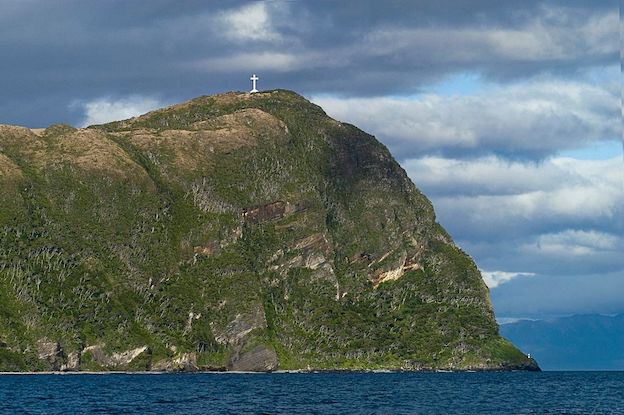
Cape Froward, Chile

BEACH & SUN

Welcome to the World’s Largest New Year’s Celebration
For those traveling from North, Central, or South America, New Year's Eve in Rio offers a rich narrative about how a city can transform a universal holiday into a unique celebration, rooted in local traditions and open to the world.













|
Experiences Finder
(Search our catalog of Experiences here.) |
|---|