|
Pan American Experiences
|
------- |


Hemisphere Related Articles:
Selena and Los Dinos: The Documentary Reviving the Legacy of a Latin American Cultural Icon.
|
HEMISPHERE ------------------------------------------1374[COLUMN] | |||
Conscious tourism on the final frontierTravel to Protect, Not to Accelerate the Deterioration of the Most Fragile Landscapes of Latin America and AntarcticaBy Estefanía Muriel for Ruta Pantera on 8/18/2026 1:11:24 PM |
||||
| There are journeys that change your life. Seeing a glacier calve, hearing the silence of Antarctica, or traveling through the Andean highlands and the Amazon awakens a mixture of awe and humility that is difficult to describe. But there is an uncomfortable question that is becoming increasingly difficult to ignore: what happens when the journey itself contributes to damaging what we went to see?
I've been fortunate enough to travel through diverse ecosystems in Latin America where nature still seems untamed. In many of them, from high mountain trails to Amazonian reserves, the same feeling always arises: the privilege of being there also implies a responsibility. No landscape exists solely to be consumed as a photograph. This contradiction reaches its peak in Antarctica, which has become a symbol of so-called "last chance tourism": visiting a place before it changes forever. However, the growing popularity of these trips has sparked a debate that no longer comes solely from scientists, but also from those who know the territory best: their own guides. When The Guides Stop Believing In an article published by The Conversation, researchers interviewed 25 former Antarctic guides who left what many would consider their dream job. One of them summed up the conflict with a powerful phrase: "I can't work in the farce of climate change cruise tourism anymore." Another testimony is even more revealing. Observing enormous glacier calving events, the guide confessed: "You'd see massive glacier calvings, and you'd just want to cry. But all the guests would be cheering." For him, the scene reflected the inability of many visitors to connect that spectacle with global warming. |
||||
|
These voices highlight a gap between the environmental rhetoric of some in the industry and some of its practices. While many tour operators promote environmental education, the number of visitors continues to grow. According to the same study, Antarctica received more than 120,000 visitors during the 2025-2026 season, and projections point to nearly 450,000 visitors per season within the next decade.
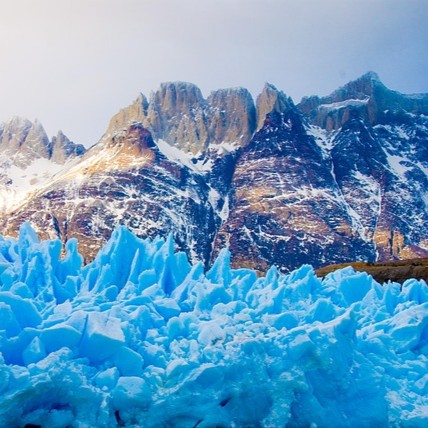
From Wonder to Necessary Questions I've walked on glaciers in Chilean Patagonia and paddled among turquoise icebergs in southern Argentina, and that awe is real, almost hypnotic. But I've also learned that awe doesn't absolve one of responsibility. Before booking a cruise or an expedition to an ecologically vulnerable area, it's worth asking about the operator's actual carbon footprint, how many passengers each vessel carries, whether there are verifiable policies for reducing impact, and whether their environmental certifications are audited by third parties or just a marketing ploy. Ideal advice for travelers isn't to look for the prettiest promise, but the most verifiable one. The solution isn't for everyone to give up traveling. Real change begins when we stop being passive spectators and become conscious travelers. Before booking a trip, it's worth asking yourself what carbon footprint the trip generates, how many passengers disembark simultaneously, whether the company limits group sizes, funds scientific research, or has verifiable environmental certifications. The same questions should guide us when visiting the Caribbean reefs, the Amazon, the Galápagos Islands, the Pantanal wetlands, or the Patagonian glaciers. Throughout Latin America, there are destinations whose beauty depends precisely on keeping human pressure low. Choosing responsible tour operators, staying on authorized trails, and strictly respecting wildlife are small decisions that, multiplied, reduce cumulative impacts. However, it's also unfair to place the entire moral burden on the tourist. The problem is structural. Companies decide the size of their ships, the frequency of trips, and investments in cleaner technologies; governments set visitor limits, regulations, and enforcement mechanisms. Without solid rules, even the most well-intentioned traveler has limited room for maneuver. Traveling Also Means Demanding Change Informed tourists can become allies of conservation by demanding transparency and rewarding those who demonstrate genuine commitment, not just green marketing campaigns, with their choices. Asking about emissions, waste management, or contributions to scientific projects sends a powerful signal to an industry that is increasingly responsive to its customers' decisions. Traveling will continue to be one of the most profound ways to understand our continent. But perhaps the true privilege lies not in reaching the most remote places, but in doing so in a way that allows those who come after us to find the same silence, the same glaciers, and the same biodiversity that we can still admire today. Ultimately, protecting Latin America and polar ecosystems isn't just about stopping travel, but about learning to travel better. Each conscious decision may seem small compared to global challenges, but thousands of responsible choices end up transforming entire industries. Perhaps the best photograph of a trip isn't the one we share upon returning, but the landscape we manage to preserve for those who have yet to arrive. |
||||
 Add this article to your favorites
[FOR MEMBERS ONLY]
Add this article to your favorites
[FOR MEMBERS ONLY]
Copy this link to send this article to a friend: [FOR MEMBERS ONLY] |
||||
|
|
||||
|---|---|---|---|---|
| |
|
|
|
|
×
|
||||
|
References: Cooper, E., Hehir, C., & Sokolickova, Z. (2026, July 25). I can't work in the farce of climate change cruise tourism anymore: Why Antarctic guides quit their dream jobs . The Conversation. https://theconversation.com/i-cant-work-in-the-farce-of-climate-change-cruise-tourism-anymore-why-antarctic-guides-quit-their-dream-jobs-286216 Phys.org. (2026, July 25). 'I can't work in the farce of climate change cruise tourism anymore': Why Antarctic guides quit their dream jobs . https://phys.org/news/2026-07-farce-climate-cruise-tourism-anymore.html International Association of Antarctica Tour Operators. (2026). Tourism statistics . https://iaato.org TheIndependent. (2026, July 23). Why Antarctic guides are quitting their dream jobs: “You'd just want to cry . ” https://www.the-independent.com/travel/news-and-advice/antarctica-cruise-tourism-guide-jobs-b3019391.html |
||||
Please leave a comment about this article: 1374 |
|
| Enter your email address: |
Your email will not be displayed. |
| Your nickname: | |
| Your comment: | |
| Was this article helpful to you? | |
|
|
|
Articles about exciting travel experiences in our hemisphere.
ADVENTURE
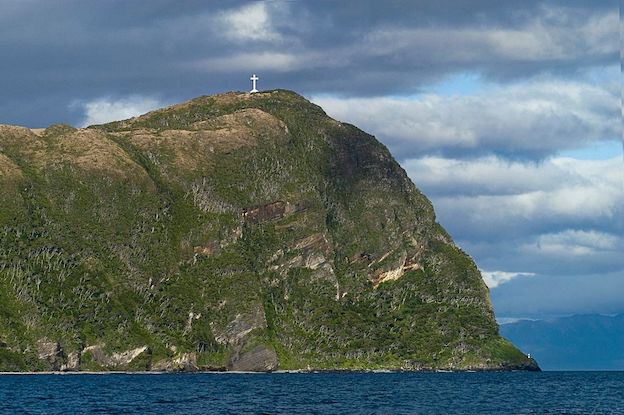
Cape Froward, Chile

BEACH & SUN

Welcome to the World’s Largest New Year’s Celebration
For those traveling from North, Central, or South America, New Year's Eve in Rio offers a rich narrative about how a city can transform a universal holiday into a unique celebration, rooted in local traditions and open to the world.











|
Experiences Finder
(Search our catalog of Experiences here.) |
|---|