|
Pan American Experiences
|
------- |

Hemisphere Related Articles: |
HEMISPHERE ------------------------------------------967[COLUMN] | |||
Does Tourism Love Democracy and Human Rights?Travelers Seek Beaches, Culture and Safety, but Their Choices Can Also Strengthen Societies that Respect Freedoms.By Estefanía Muriel for Ruta Pantera on 10/27/2026 11:23:18 AM |
||||
| On a street in Salvador de Bahia, the aroma of freshly fried acarajé mingles with the murmur of the Atlantic and the drums announcing a celebration. A few meters away, a guide explains to visitors the city's African heritage, marked by centuries of slavery, resistance, and the fight for rights. The traveler photographs the vibrant colors, tastes the food, and listens to the stories. But what happens when the beauty of a destination coexists with inequality, violence, or restrictions on freedoms? Can a place be truly enjoyed without questioning who pays the price for its prosperity?
The question isn't whether all tourists vote according to their political conscience before booking a hotel. Most compare prices, flights, weather, infrastructure, and safety. However, tourism never happens in a vacuum: it needs functioning institutions, protected workers, communities capable of defending their territories, and spaces where culture can be freely expressed. Democracy and human rights may not always determine the initial choice, but they do influence the conditions that make a dignified and sustainable tourism experience possible. On October 26, 2026, an Al Jazeera opinion piece by analyst Guillaume Long presented Luiz Inácio Lula da Silva's electoral victory as a potential turning point for Latin America. His argument links democracy, sovereignty, social policies, and environmental protection. For tourism, the question is relevant: can political freedoms and shared prosperity become advantages for a destination? And, above all, what does the evidence actually show when millions of people continue to travel to countries with serious human rights problems? The Evidence: a Relationship That Is Not Automatic Academic research allows us to approach these questions, although it is important to distinguish between studies on the individual preferences of tourists and those that examine the economic consequences of tourism in host countries. They do not measure the same thing. A person can choose a destination without knowing its political system, while macroeconomic research may find that democratic institutions favor a broader distribution of tourism benefits, without demonstrating that visitors booked for ideological reasons. A study by Acheampong, Opoku, and Koomson (2025), published in Tourism Management Perspectives, analyzed data from 154 countries between 2000 and 2020. Their findings indicate that both inbound tourism and democracy are positively related to inclusive growth, and that democratic institutions can strengthen the economic impact of tourism. The authors also caution that the results vary according to countries' income levels. This is important evidence regarding development, but not proof that tourists prefer democracies. Another study, by Dossou (2026), examined the interaction between tourism, democracy, and economic growth in Africa during the period 2000–2020. Its relevance lies in examining how political institutions modify the relationship between tourism activity and development. None of these studies allows us to conclude that human rights are the primary criterion for choosing vacations. To demonstrate this, we would need, among other evidence, surveys of actual decisions, choice experiments, and data that separate political values from factors such as price, connectivity, safety, and the destination's reputation. |
||||
|
Brazil and Mexico: Tourism Growth, Political Contradictions
Brazil offers a compelling combination. According to the Organisation for Economic Co-operation and Development (OECD, 2026), it received a record 9.3 million international arrivals in 2025, a 37.1% increase compared to 2024. Spending by foreign visitors approached US$7.9 billion, while tourism supported 2.3 million formal jobs in 2024. The country boasts extraordinary attractions, from the Amazon rainforest to its historic cities and beaches. These figures demonstrate dynamism, but they do not allow us to attribute this growth solely to the government's political orientation. Long, in his article in Al Jazeera, points out that the Brazilian economy grew cumulatively by 9.2% between 2023 and 2025, and that unemployment fell from 9.3% in 2022 to 5.4% in 2026. Economic recovery, employment, international promotion, and connectivity can improve conditions for travel and receiving visitors. However, Brazil also faces police violence, territorial conflicts, and environmental tensions, as documented by Human Rights Watch (2026). A democracy does not automatically eliminate these violations. Mexico offers a second perspective. Between January and July 2026, the country received 59.7 million international visitors, 7% more than during the same period in 2025, according to the Ministry of Tourism. Of these, 28.9 million were tourists who stayed overnight. These results are consistent with the appeal of its beaches, gastronomy, heritage, and connectivity, as well as its promotional and diversification policies. However, tourism growth under progressive governments does not necessarily mean that progressivism caused it. Mexico continues to face serious problems with violence, impunity, and the rule of law, as highlighted by Freedom House and Human Rights Watch. Commercial success alone does not equate to progress in human rights. The Responsibility of an Industry That Cannot Look the Other Way There's a difference between visiting a country and supporting everything its government does. Confusing the two oversimplifies a complex reality: tourism also sustains small hotels, local guides, Indigenous communities, family-run restaurants, and conservation projects. Indiscriminately canceling a destination can harm precisely those with the least political power. But ignoring working conditions, the displacement of residents, or the exploitation of communities is not an innocent stance either. The industry has concrete tools to take action. Companies can assess their supply chains, combat labor and sexual exploitation, guarantee decent working conditions, and consult with communities before developing projects. UN Tourism places sustainability at the intersection of economic development, social inclusion, and environmental protection. Applied rigorously, this perspective requires measuring more than just arrivals and revenue: it also requires considering who benefits, who loses access to their territory, and who can report abuses without fear. Travelers, for their part, can research before booking, hire responsible tour operators, respect cultural and environmental norms, and support local businesses that distribute income more equitably. They can also consider whether a tourist experience depends on precarious work or the exclusion of local residents. This isn't about demanding an impossible moral purity or turning every trip into a political test, but about recognizing that consumer choices have consequences. Democracy shouldn't be merely an advertising requirement; it should be reflected in the freedom and dignity of the people who make travel possible. Perhaps tourism doesn't love democracy in the same way a citizen defends their right to vote. The available data doesn't allow us to say so. But it does suggest that more inclusive institutions can help transform tourism into shared well-being. Latin America boasts extraordinary natural and cultural wealth, along with inequalities that no number of visitors can hide. The question that remains is more demanding than deciding where to spend our next vacation: do we want to visit places that simply receive us, or do we want to contribute to helping the people who live there build a freer and more dignified future? |
||||
 Add this article to your favorites
[FOR MEMBERS ONLY] Copy this link to send this article to a friend: [FOR MEMBERS ONLY] |
||||
|
|
||||
|---|---|---|---|---|
| |
|
|
|
|
×
|
||||
|
References: Acheampong, A. O., Opoku, E. E. O., & Koomson, I. (2025). Effect of inbound tourism on inclusive growth: Does institutionalized democracy matter? Tourism Management Perspectives, 58, Article 101382. https://doi.org/10.1016/j.tmp.2025.101382 Dossou, T. A. M. (2026). Tourism, democracy and economic growth in Africa. Journal of International Development, 38(3), 570–588. https://doi.org/10.1002/jid.70071 Freedom House. (2026). Mexico: Freedom in the World 2026. https://freedomhouse.org/country/mexico/freedom-world/2026 Human Rights Watch. (2026). Informe Mundial 2026: Brasil. https://www.hrw.org/es/world-report/2026/country-chapters/brazil Human Rights Watch. (2026). Informe Mundial 2026: México. https://www.hrw.org/es/world-report/2026/country-chapters/mexico Long, G. (2026, 26 de octubre). Lula’s victory may be a turning point for Latin America. Al Jazeera. https://www.aljazeera.com/opinions/2026/10/26/lulas-victory-may-be-a-turning-point-for-latin-america Organización para la Cooperación y el Desarrollo Económicos. (2026). OECD Tourism Trends and Policies 2026: Brazil. https://www.oecd.org/en/publications/oecd-tourism-trends-and-policies-2026_3fd3cd75-en/full-report/brazil_64ed15fb.html Secretaría de Turismo. (2026, 25 de septiembre). A dos años del Gobierno de la Presidenta Claudia Sheinbaum, México rompe récords turísticos e impulsa la Prosperidad Compartida. Gobierno de México. https://www.gob.mx/sectur/articulos/a-dos-anos-del-gobierno-de-la-presidenta-claudia-sheinbaum-mexico-rompe-records-turisticos-e-impulsa-la-prosperidad-compartida ONU Turismo. (s. f.). Resoluciones de la ONU sobre el turismo sostenible. https://www.unwto.org/es/sustainable-development/onu-turismo-sostenible |
||||
Please leave a comment about this article: 967 |
|
| Enter your email address: |
Your email will not be displayed. |
| Your nickname: | |
| Your comment: | |
| Was this article helpful to you? | |
|
|
|
Articles about exciting travel experiences in our hemisphere.
ADVENTURE
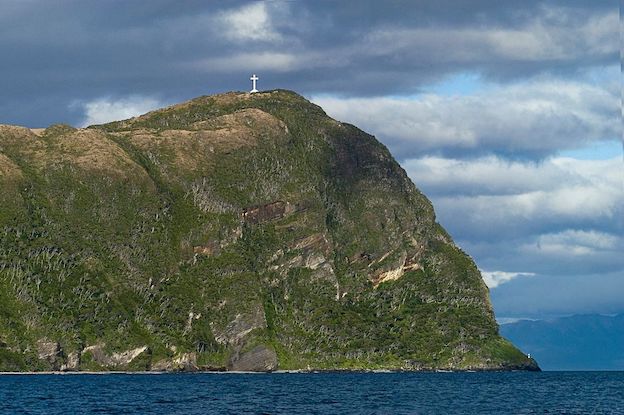
Cape Froward, Chile
BEACH & SUN

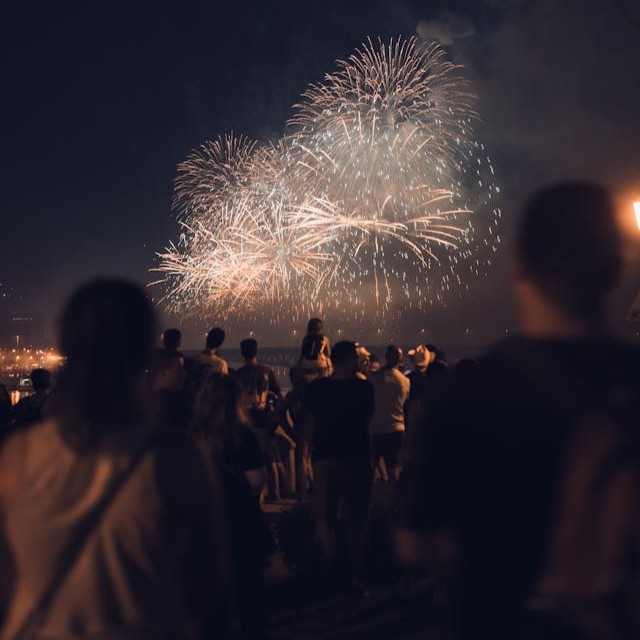
Welcome to the World’s Largest New Year’s Celebration
For those traveling from North, Central, or South America, New Year's Eve in Rio offers a rich narrative about how a city can transform a universal holiday into a unique celebration, rooted in local traditions and open to the world.










|
Experiences Finder
(Search our catalog of Experiences here.) |
|---|