|
Pan American Experiences
|
------- |

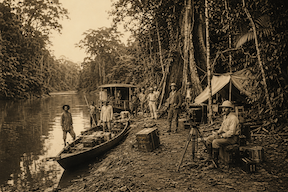
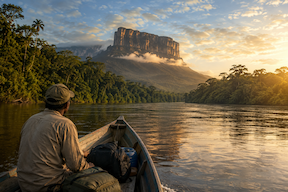
An early expedition photograph from the Amazon captures a moment when rivers served as maps and cameras were carried into landscapes still poorly understood by the outside world. What once represented exploration now serves as a historical record of a rainforest whose scale, complexity, and human history continue to reveal new stories.
AI: a Double-Edged Sword for Travel Agents
|
HEMISPHERE ------------------------------------------978[TRAVEL+NATURE] | |||
The Expedition That Photographed the Amazon Before Anyone Knew What Was ThereThe First Photographic Records of the Rainforest Captured Its Landscapes, Its Peoples, and the Limits of Nineteenth-Century ExplorationBy Marbel Montoya for Ruta Pantera on 10/29/2026 11:23:18 AM |
||||
| The Amazon entered the photographic record long before satellites could trace its rivers or aerial surveys reveal the extent of its forests. In the mid-nineteenth century, photographers carried cumbersome equipment into a landscape that challenged both scientific knowledge and the technology used to document it. Their images preserved something that written reports alone could not: a visual record of the rainforest, its settlements, its waterways, and the people who inhabited it. One of the pioneers was Christoph Albert Frisch, a German photographer whose work in the Upper Amazon during the 1860s produced one of the earliest substantial photographic collections of the region. Working on commission for the Brazilian photographic publisher Casa Leuzinger, Frisch documented people, vegetation, wildlife, settlements, and river transportation. His photographs helped introduce Amazonian landscapes to audiences far beyond South America. The expedition was a technical achievement as much as a photographic one. Cameras and glass negatives were fragile, supplies were difficult to transport, and tropical humidity complicated the preparation and preservation of photographic materials. Producing an image required considerably more work than pressing a shutter: equipment had to travel with the expedition, photographic materials needed careful handling, and every successful exposure depended on conditions that could change along the river. Yet the resulting collection offered an unusually broad record of a region that many distant audiences knew primarily through travel accounts, commercial ambitions, and secondhand descriptions. A Forest Recorded One Image at a Time Frisch's photographs were not limited to sweeping views of the rainforest. They included portraits, plants, animals, dwellings, settlements, and scenes of river life. This variety matters because an ecosystem cannot be understood through scenery alone. Its history is also written in the relationship between water and land, the distribution of settlements, the movement of people, and the ways communities use their surroundings. The photographs also reveal the practical geography of Amazonian travel. Rivers were essential routes through the region, linking communities and trading centers across distances that were difficult to cross overland. Boats, ports, and riverside settlements were therefore not incidental details. They formed part of the infrastructure through which people moved, worked, exchanged goods, and encountered outsiders. Frisch's collection eventually became a carefully selected group of images for commercial and public circulation. The published photographs shaped how readers in Europe and elsewhere imagined the Upper Amazon. What reached those audiences, however, was not an unfiltered view of the forest. Photographers chose angles, subjects, and compositions; publishers selected which images to reproduce and how to present them. The resulting archive records the landscape, but it also records the decisions through which that landscape was represented. |
||||
|
What the Archives Reveal—and What They Leave Out Other photographers continued this work toward the end of the nineteenth century. German photographers Charles Kroehle and George Huebner traveled through the Peruvian Amazon beginning in 1888, documenting landscapes and Indigenous communities. Their photographs later circulated through illustrated publications and collections, including images associated with the album República Peruana, published in 1900. Today, photographs preserved in institutions such as the Smithsonian's National Anthropological Archives and Berlin's Ibero-American Institute allow researchers to revisit these early visual records. Their value extends beyond the historical curiosity of seeing a landscape before modern infrastructure transformed parts of it. The images provide evidence for studying how places, communities, and environments were represented at a particular moment. But historical photographs have limits. A single image cannot establish the full extent of a forest, identify every species in view, or prove that a location was untouched by human activity. Nor can a photograph taken from one riverbank establish how an entire ecosystem has changed. Reliable comparisons require identifiable locations, dates, supporting documents, and, where possible, other forms of environmental evidence. There is also a necessary correction to the language of exploration. The Amazon was never an empty territory awaiting discovery. Indigenous peoples had inhabited and shaped its landscapes for generations, with knowledge of rivers, forests, plants, and seasonal cycles that visiting photographers often could not fully understand. The archive therefore records not only what outsiders saw, but also the limits of their perspective. Reading the Amazon Through Its Photographic Past These early photographs are valuable because they preserve details that later generations can investigate. When a location can be identified and its historical image compared with later photographs, maps, or satellite observations, researchers may be able to trace changes in settlement patterns, riverbanks, vegetation, and land use. Such comparisons must be made carefully: differences in camera position, season, lighting, and image quality can affect what appears to have changed. The photographs cannot, on their own, provide a complete environmental baseline for the Amazon. They were created selectively, cover only particular places, and were not generally produced according to a standardized scientific monitoring system. Their strength lies elsewhere: they offer dated visual evidence that can be combined with other historical and ecological records to investigate specific questions about the region's past. More than a century after these cameras entered the rainforest, their images continue to serve as field records from an earlier period of photography and travel. They show how the Amazon appeared from particular vantage points, how outsiders attempted to document it, and how much remained beyond the frame. The most revealing detail may be that the photographs never captured the whole forest. They recorded fragments: a settlement, a river crossing, a stand of trees, a group of people, a stretch of water. Read critically and alongside other evidence, those fragments become more than historical curiosities. They become pieces of an archive through which the Amazon's environmental and human histories can be examined. |
||||
 Add this article to your favorites
[FOR MEMBERS ONLY] Copy this link to send this article to a friend: [FOR MEMBERS ONLY] |
||||
|
|
||||
|---|---|---|---|---|
| |
|
|
|
|
×
|
||||
|
References: Biblioteca Nacional del Perú. (s. f.). Álbum República Peruana 1900: Albores y anhelos de modernización. Memoria Perú. https://memoriaperu.bnp.gob.pe/micrositio/album-republica-peruana - Ibero-Amerikanisches Institut. (s. f.). Frisch, Albert (1840–1918). https://www.iai.spk-berlin.de/en/collections/about-the-special-collections/image-archive/material/frisch-albert-1840-1918.html - Ibero-Amerikanisches Institut. (s. f.). Kroehle, Charles (1867–1902?). https://www.iai.spk-berlin.de/en/collections/about-the-special-collections/image-archive/material/kroehle-charles-1867-1902.html - La Serna, J. C. (2018). Bosque, fotografía y exposición: La construcción visual de la Amazonía a través de los clichés de Charles Kroehle y el álbum República peruana 1900. HISTOIRE(S) de l’Amérique latine, 13. https://www.hisal.org/index.php/revue/article/download/laserna2018/250/768 - Smithsonian Institution, National Anthropological Archives. (s. f.). Charles Kroehle and George Huebner photographs of Indigenous peoples of Peru, circa 1880s. https://sova.si.edu/record/naa.photolot.129 |
||||
Please leave a comment about this article: 978 |
|
| Enter your email address: |
Your email will not be displayed. |
| Your nickname: | |
| Your comment: | |
| Was this article helpful to you? | |
|
|
|
Articles about exciting travel experiences in our hemisphere.
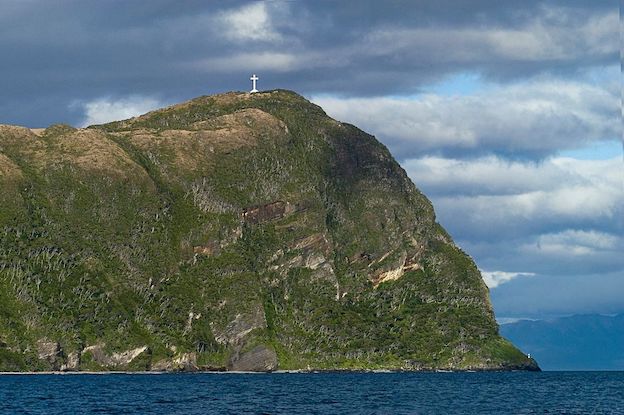
Cape Froward, Chile
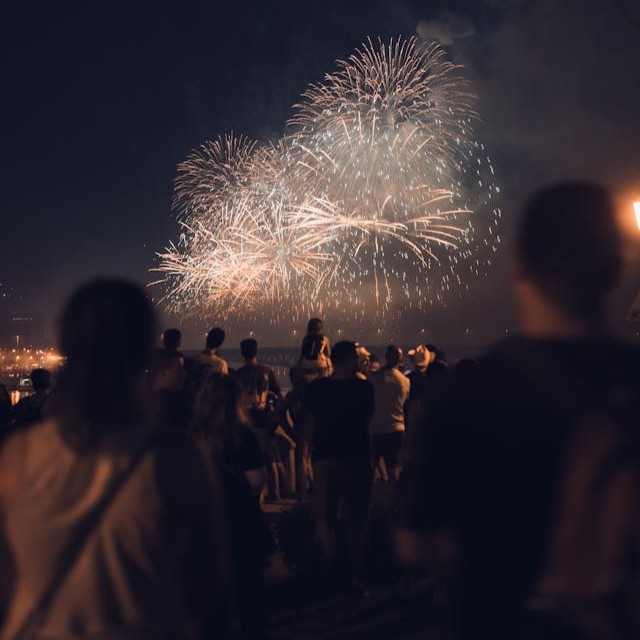

Welcome to the World’s Largest New Year’s Celebration
For those traveling from North, Central, or South America, New Year's Eve in Rio offers a rich narrative about how a city can transform a universal holiday into a unique celebration, rooted in local traditions and open to the world.








|
Experiences Finder
(Search our catalog of Experiences here.) |
|---|