|
Pan American Experiences
|
------- |

Related Articles:
The Harpy Eagle and the People Who Still Tell Stories about It |
------------------------------------------410[EXPERIENCE] | |||
Sapo: The Beloved Peruvian Fair Game of Skill and LuckBy Jazmin Agudelo for Ruta Pantera on 10/10/2025 10:13:19 AM |
||||
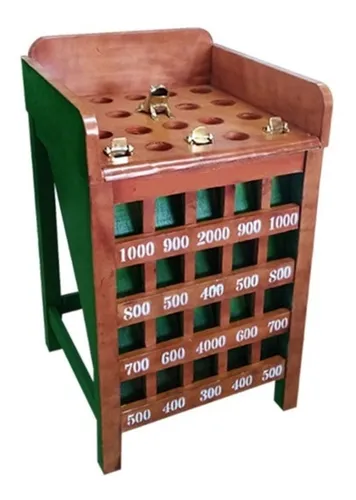
| In the bustling markets of Cusco, the lively fairs of Lima, and the courtyards of homes in the Andean highlands, a distinctive sound rings out: the metallic clink of a coin landing in the mouth of a bronze toad. This is the game of sapo, a cherished Peruvian pastime that blends luck, skill, and a deep sense of community. More than mere entertainment, sapo is a cultural emblem, a bridge between generations, and a celebration of the joy found in simplicity. In a country where ancient traditions intertwine with modernity, sapo stands as a reminder of Peru’s ability to transform the ordinary into the extraordinary. The Origins of Sapo: A Legacy with Deep Roots The origins of sapo, also known as juego del sapo or Peruvian sapo, are shrouded in the mists of time, with theories linking it to both pre-Columbian traditions and colonial influences. Some historians suggest the game has roots in Andean cultures, where games of precision involving thrown objects were common in rituals and celebrations. “The Incas and other pre-Columbian societies valued manual dexterity in their games,” explains Dr. Ana María Morales, an anthropologist at the National University of San Marcos. “It’s possible that sapo evolved from ceremonial practices where objects were tossed toward specific targets as offerings or tests of skill.” However, the modern form of sapo, with its characteristic bronze toad and metal coins, likely emerged during the colonial period. Spanish colonizers brought similar games, such as Spain’s juego de la rana, which involved tossing coins or discs toward a figure with an open mouth. In Peru, this game merged with local traditions, adopting the toad—an animal revered in Andean cosmology for its association with water and fertility—as its central symbol. “Sapo is not just a game; it’s a meeting point between Indigenous and colonial cultures,” says Morales. “It’s an example of how Peru has blended traditions to create something unique.” | ||||
| Over the centuries, sapo spread across the country, from Lima’s markets to remote Andean and Amazonian villages. Its simplicity—a table, a bronze toad, and a handful of coins—made it accessible to all, from children in the streets to elders in town squares. In a nation marked by geographic and cultural diversity, sapo became a common language, a pastime that united communities in a spirit of friendly competition. The Rules of the Game: A Balance of Luck and Skill Sapo is deceptively simple, but its magic lies in the delicate balance between luck and skill. The game is played on a rectangular table, often wooden, with a surface perforated by multiple holes, each assigned a different point value. At the center or back of the table sits the bronze toad, its open mouth serving as the primary target. Players, standing a few meters away, toss metal coins (small brass or copper discs) aiming to land them in the toad’s mouth or the table’s holes. Scoring varies by region and local rules. In the most common version, the toad’s mouth awards the highest points, often 4,000 or 5,000, while smaller holes on the table are worth less, ranging from 100 to 1,000 points. “Every town has its own system,” says José Quispe, an Ayacucho artisan who crafts sapo tables. “In some places, landing a coin in a specific hole might earn you an extra point for ‘style.’ It all depends on the community.” The game can be played individually or in teams, with rounds continuing until a predetermined score is reached or a set number of tosses is completed. The key lies in technique: a gentle but precise throw, with a flick of the wrist that sends the coin gliding in a perfect arc. Seasoned players know to adjust their force based on distance and the coin’s weight, while novices often rely on luck, leading to moments of hilarity when a wayward toss lands a miraculous score. A Symbol of Community: Sapo in Peruvian Life Sapo is more than a game; it’s a social ritual that strengthens community bonds. At patron saint festivals, such as the Feast of San Juan in the Amazon or the Virgen de la Candelaria in Puno, sapo tables are a must-have attraction. Entire families gather around, with grandparents teaching younger generations the game’s tricks while spectators wager small sums or trade banter. “Sapo is an equalizer,” says Marisol Vargas, a market vendor in Cusco. “It doesn’t matter if you’re rich or poor, young or old. Everyone can play, everyone can laugh.” In rural areas, sapo is often played on handcrafted tables, carved with designs reflecting local identity, such as Inca motifs or Amazonian patterns. In cities, the game has found a place in bars and restaurants, where informal tournaments draw diverse crowds. In Lima, for instance, historic venues like Bar Cordano in the city center have maintained sapo tables for decades, becoming gathering spots for nostalgics and newcomers alike. The game also holds a special place in family celebrations. At birthdays, weddings, or reunions, a sapo table can transform a backyard into a stage for competition and camaraderie. “When you set up a sapo table, the party begins,” says Vargas. “It’s like lighting a spark: everyone wants to try, everyone wants to win.” Sapo’s Golden Age and Its Challenges Sapo reached its zenith in the 20th century, particularly between the 1950s and 1980s, when fairs and markets were the heart of Peru’s social life. During this period, the game became institutionalized in certain regions, with organized tournaments attracting players from across the country. In Cusco, for example, the Huancaro Fair became a sapo epicenter, with competitions offering prizes like handmade trophies or even live animals, a tradition that persists in some rural areas. Yet, the game faced challenges with Peru’s modernization. Urbanization and the rise of electronic entertainment, such as video games and social media, began to displace traditional pastimes. “Kids today prefer their phones to a sapo table,” laments Quispe. “It’s hard to compete with a screen.” Additionally, the growth of cities and the reduction of public spaces have limited opportunities for street play, relegating sapo to fairs or specific events. Globalization has also introduced new forms of entertainment that compete with sapo. In major cities, shopping malls and modern attractions have replaced traditional fairs, leaving less space for games like sapo. Nevertheless, the game has shown remarkable resilience, thanks in part to the efforts of artisans and communities who continue to craft tables and organize tournaments. Sapo Today: A Persistent Legacy Despite these challenges, sapo remains a vibrant presence in Peru. In regions like Cusco, Ayacucho, and Puno, sapo tournaments are highlights of annual fairs, drawing both local players and curious tourists. Cultural organizations, such as the Pisac Artisans Association, have worked to preserve the game, offering workshops where young people learn to build sapo tables and master its techniques. “We don’t want sapo to disappear,” says Quispe. “It’s part of our identity, like ceviche or pachamanca.” Tourism has also breathed new life into the game. In destinations like the Sacred Valley or Machu Picchu Pueblo, sapo tables have become an attraction for visitors, who delight in trying a game so deeply Peruvian. “Tourists love it because it’s authentic,” says Vargas. “It’s not something you find in a resort. It’s real, it’s ours.” In the Peruvian diaspora, sapo has also found a home. In cities like Miami, Los Angeles, and Madrid, Peruvian communities organize sapo tournaments as a way to stay connected to their roots. These events, often accompanied by traditional food and Andean music, are a celebration of Peruvian identity abroad. The Cultural Significance of Sapo Sapo is more than a game; it’s a reflection of Peruvian values: community, creativity, and resilience. In a country where geographic, social, and economic divides can be stark, sapo acts as a unifier, a pastime that transcends barriers. “Sapo is a metaphor for Peru,” says Dr. Morales. “It’s simple yet profound; accessible yet steeped in history. It’s a reminder that happiness doesn’t require much—just a bit of ingenuity and good company.” The game also embodies Peru’s ability to preserve its traditions in the face of modernity. In an increasingly digital world, sapo offers a tactile connection to the past, a reminder of days when fun didn’t depend on screens but on human interaction. Its simplicity—a bronze toad, a wooden table, a metal coin—contrasts with the complexity of modern life, offering an escape from the frenetic pace of the 21st century. The Future of Sapo As Peru moves into the future, sapo faces the challenge of staying relevant in a changing world. Advocates are working to ensure its survival, from artisans crafting sapo tables with sustainable materials to cultural organizations promoting tournaments in schools and communities. Technology also offers opportunities: social media videos and documentaries have brought sapo to a global audience, attracting new generations of players. Some propose integrating sapo into modern urban spaces, such as parks or cultural centers, to ensure it remains accessible. Others advocate including the game in school curricula as a way to teach Peruvian history and culture. “Sapo is not just a game; it’s a lesson,” says Morales. “It teaches patience, community, and the value of simplicity. That’s something today’s kids need to learn.” Ultimately, sapo’s future depends on the willingness of Peruvian communities to keep it alive. As long as there are fairs, families, and friends ready to toss a coin toward a toad’s mouth, the metallic clink will continue to resonate, a sound carrying the soul of Peru. | ||||
 Add this article to your favorites
[FOR MEMBERS ONLY]
Add this article to your favorites
[FOR MEMBERS ONLY]
Copy this link to send this article to a friend: [FOR MEMBERS ONLY] |
||||
|
|
||||
|---|---|---|---|---|
| |
|
|
|
|
×
|
||||
Please leave a comment about this article: 410 |
|
| Enter your email address: |
Your email will not be displayed. |
| Your nickname: | |
| Your comment: | |
| Was this article helpful to you? | |
|
|
|
Articles about exciting travel experiences in our hemisphere.
ADVENTURE
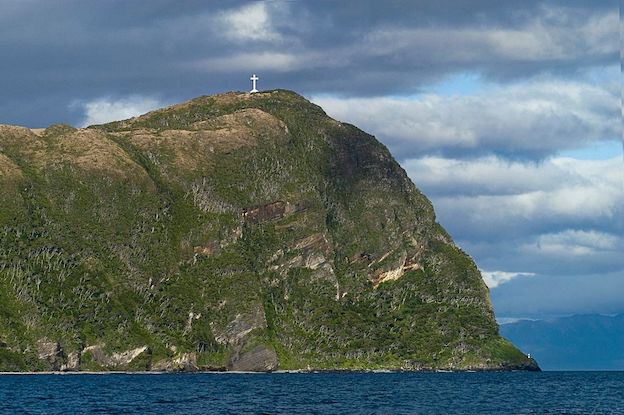
Cape Froward, Chile

BEACH & SUN

Welcome to the World’s Largest New Year’s Celebration
For those traveling from North, Central, or South America, New Year's Eve in Rio offers a rich narrative about how a city can transform a universal holiday into a unique celebration, rooted in local traditions and open to the world.








|
Experiences Finder
(Search our catalog of Experiences here.) |
|---|